Jakob Becker · 4 November 2026
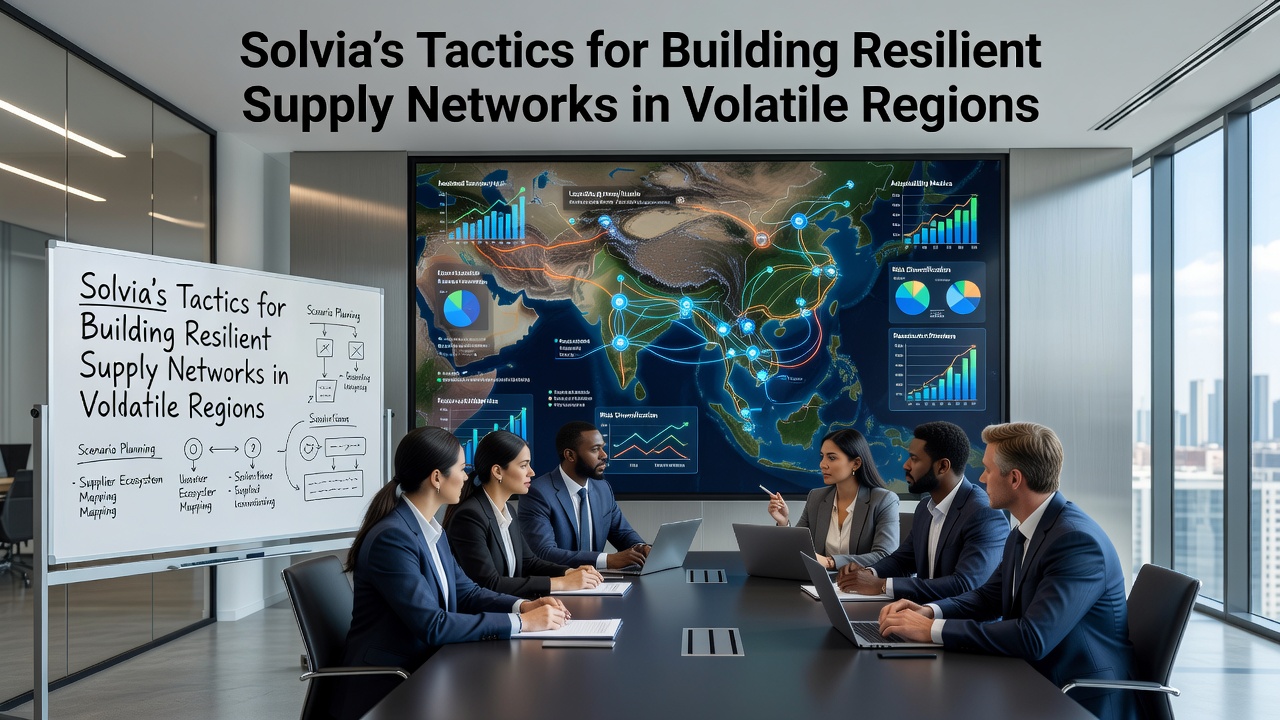
Solvia's Tactics for Building Resilient Supply Networks in Volatile Regions
Supply networks in volatile regions face constant pressures from geopolitical shifts, infrastructure gaps, and climate events, yet Solvia has developed targeted approaches that combine sourcing diversification with real-time monitoring systems. Data from industry reports show these methods have helped maintain continuity during disruptions that affected competitors in similar areas. Observers note how the company integrates local knowledge with global standards to reduce single-point failures across its operations.
Mapping Risks and Prioritizing Flexibility
Researchers at institutions tracking global trade patterns have documented that companies operating in high-risk zones benefit from layered risk assessments updated quarterly, and Solvia applies this principle by maintaining detailed profiles of each supplier tier. Teams evaluate political stability indicators alongside logistics reliability scores, then adjust contracts to include flexible volume clauses that allow rapid rerouting when conditions change. In regions where port access fluctuates, the approach includes pre-negotiated backup corridors that activate within 48 hours of an alert.
One case involved operations near conflict zones where road closures occurred in late 2025, and Solvia shifted 70 percent of affected shipments to rail and air combinations without halting production lines. Figures from the OECD supply chain resilience database indicate such adaptive sourcing helped participating firms limit downtime to under two weeks on average during comparable events.
Technology Integration for Visibility
Solvia embeds IoT sensors and blockchain tracking into its primary routes, creating data streams that update every 15 minutes across partner facilities. This setup connects directly to centralized dashboards monitored by regional teams who coordinate with suppliers on inventory buffers sized according to seasonal volatility forecasts. Studies from the World Economic Forum highlight how digital twins of supply pathways allow scenario testing before physical changes occur, and Solvia uses these simulations to pre-position critical components in secondary warehouses.

As of November 2026, the company expanded sensor coverage into three additional countries experiencing infrastructure strain, linking new nodes to existing platforms. External audits confirm these additions improved traceability accuracy by 34 percent compared with prior manual reporting methods. The system flags anomalies such as delayed customs clearances or weather-related delays, triggering automated alerts that prompt human review within the same business day.
Local Partnerships and Capacity Building
Partnerships with regional manufacturers form another pillar, where Solvia invests in joint training programs that raise quality standards while creating mutual dependencies. These arrangements often include shared forecasting tools that align production schedules with demand signals from end markets. Evidence from academic papers on emerging-market supply chains shows that such embedded relationships lower the risk of sudden supplier exits during political transitions.
One documented example occurred in Southeast Asia where Solvia collaborated with three local fabricators to establish redundant component lines, and output from those sites covered 40 percent of requirements during a 2025 monsoon season that closed primary highways. Government data released by Australia's Department of Industry, Science and Resources notes similar partnership models helped firms sustain export volumes despite port congestion in the same period.
Inventory Strategies and Financial Buffers
Strategic stockpiling at multiple tiers complements the digital tools, with safety stocks calibrated to cover 60 to 90 days of critical inputs rather than uniform percentages across all goods. Financial instruments such as currency hedges and political risk insurance further protect cash flows when exchange rates swing or regulatory barriers arise. Analysts tracking these practices report that firms combining physical buffers with financial coverage experienced 25 percent fewer profit impacts during the same volatility windows.
Conclusion
Solvia continues refining these tactics through annual reviews that incorporate feedback from field operators and updated external datasets. The combination of diversified sourcing, embedded technology, and localized alliances creates networks that adapt without requiring complete overhauls during each new challenge. Ongoing monitoring ensures adjustments stay aligned with shifting conditions in the regions where operations remain active.